A PROPER EPIC
By Divine Amarys
July 16, 2026 at 08:19
To preface:
No, I am not going to get into the film's historical accuracy. Films are not obligated to be accurate to the original content, and if you believe that, then you must think great films like Kubrick's THE SHINING are garbage (if you do, then I don't have much else to say to you, honestly). A film is an interpretation, not a mirror. If you want something that perfectly portrays Homer's concept, then just read the poem itself and let your imagination take over. This is Nolan's interpretation, and so if you don't want to see how Nolan viewed this story, then don't watch it. And for all the purists, yes, I have read THE ODYSSEY before this, and I still don't really care that it isn't entirely accurate. And secondly, I do have a lot to say about the elitist arguments going on about the whole 'making a movie for IMAX' controversy, but that will not be included in this review.
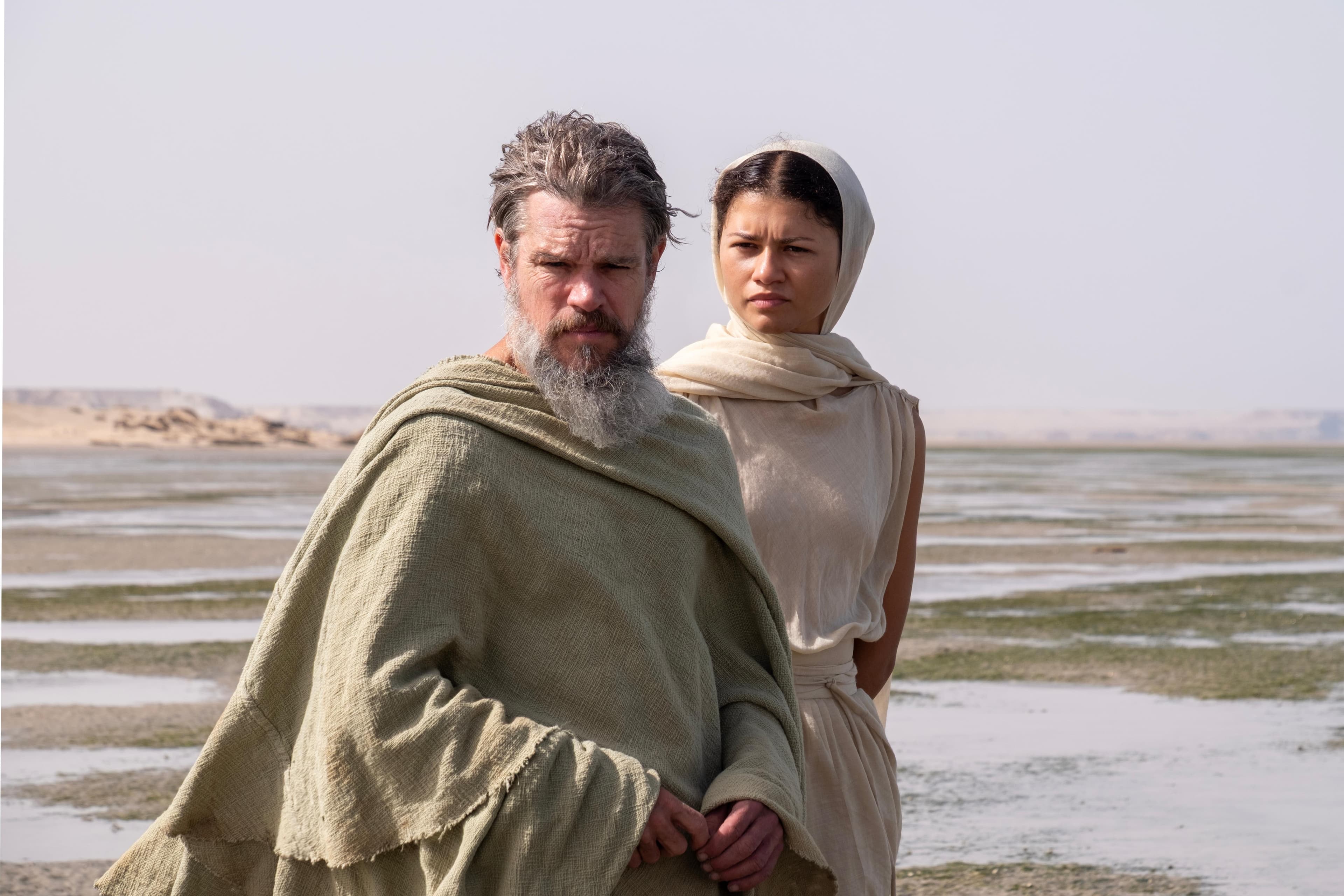
Nolan is a storyteller first and a filmmaker second. I definitely have my share of issues with the guy, but one thing I can appreciate is that he knows exactly how to paint and immerse you in a picture. THE ODYSSEY is the prime example of this. He really throws you into this story. To really explain this, I have thalassophobia, which basically means I'm terrified of any deep body of water—so this film? Had me shaking... I genuinely felt at times that the cinema seats were gonna collapse and sink me into the water. And not to mention that once the credits rolled and everyone turned on their phones, I completely forgot we were in 2026. I mean, I genuinely felt very thrown aback as if I was a time traveller.
Something we don't often talk about is Nolan's use of sound design and editing, something I think he personally mastered in OPPENHEIMER. He brings back that same practice here. I've always said that editing is the punctuation of film: knowing when to intercut from one shot to the next, and when to stay on a face, is the equivalent of knowing when to use commas and periods for authors. And Nolan is one of the few modern filmmakers who really understand this. With his lengthy runtimes, massive worlds, and stories, this is a necessity. Nolan's momentum is fantastic, despite being long, he doesn't lose you because he knows exactly when to cut and when not to. But more importantly, he also knows when to bend the rules, such as when to cut between two completely different shot sizes to convey different power dynamics and dissonance. His editing in this film is definitely the glue that holds it together. The sound design echoes like a scream for help in an empty cave; it continues to ripple through the story, growing more expansive as it progresses. It's the cue for almost every emotion in this film, and it only amplifies everything the film is. While overwhelming at times and stealing the spotlight when it maybe should've stayed in the background, it is a grounding element of the film.
The film is at best described as convincing. It convinces you that everything you are seeing isn't just real but palpable. You really feel like you're in that cave, you really feel Odysseus's passion and Penelope's heartbreak, you feel it all. The film has its problems, I can't deny that. Some performances are inconsistent, and I think the themes could've been enforced a bit more throughout the film rather than towards the end. I think there are a few more problems I have with the film, hence the rating, but I still am riding that recency wave and haven't quite found the words to articulate it properly.
So overall, the film is an experience. Watch it big, watch it LOUD, in fact, don't just watch it, dive into it! Forget what the reviews are saying (including this one), forget looking for accuracy points, and try to live in that world as best you can and let Nolan do the rest; you'll be guaranteed one hell of a good time.